Why Does My Horse Struggle at the Canter...and How Can I Help?
If you’ve ever wondered, “Why does my horse struggle at the canter?”—or lope, if you ride Western—you’re not alone.
Maybe your horse rushes into the transition, picks up the wrong lead, falls onto the forehand or becomes tight and inverted. They may be a green horse that is still learning or an older horse that never developed a balanced canter.
It’s easy to assume the answer is more cantering. In my experience, the canter usually isn’t the problem.
A Good Canter Begins Before the Canter
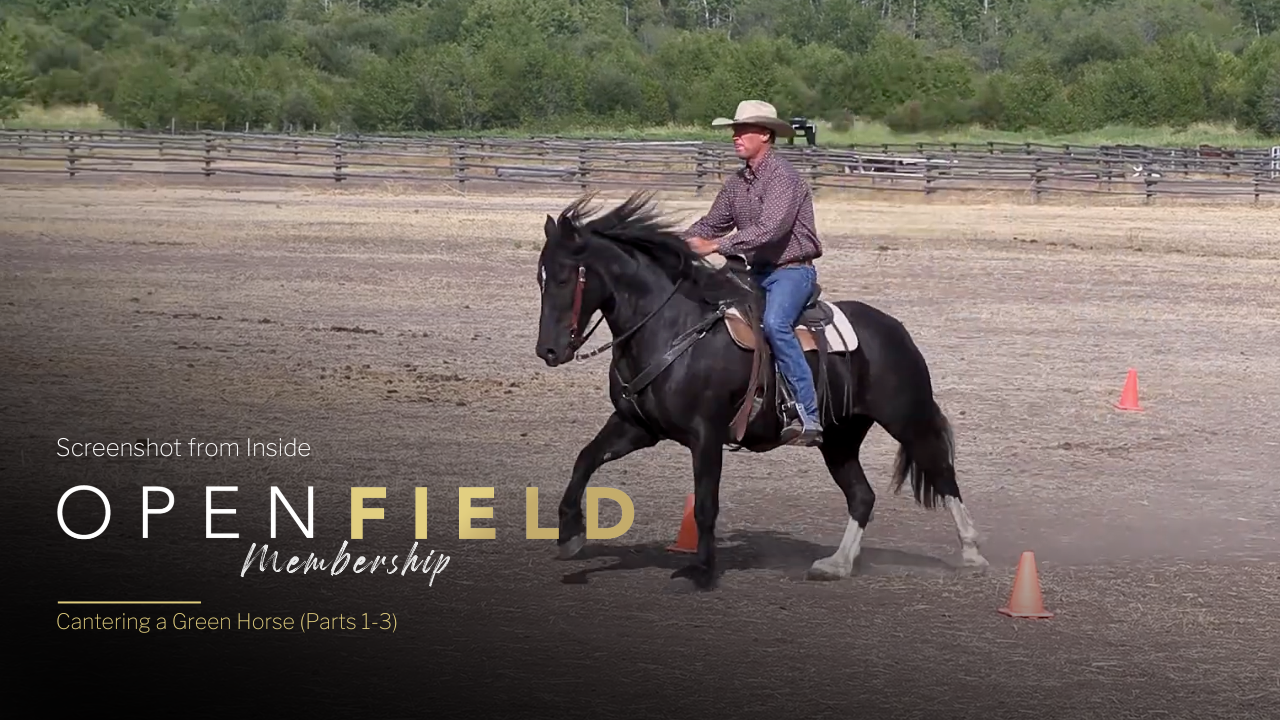
The canter asks more of the horse than either the walk or trot. It requires more lateral bend, balance and strength, with a moment when all four feet are off the ground.
If those pieces aren’t in place before the transition, the horse will compensate by rushing, losing their bend, falling onto the forehand or becoming anxious.
The goal is to prepare the horse at the trot so they already understand the path, rhythm and body position you want. Then the canter becomes a natural next step rather than a sudden change they have to struggle through.
An Exercise You Can Try Today
Start by establishing what I call a Responsibility Circle at the trot. Can your horse maintain the path and rhythm without constant correction?
Once the circle feels organized, ask your horse to step a stride or two sideways from your inside leg (leg yield). This helps create the lateral bend and balance needed for a better canter departure.
When your horse can maintain the circle and step laterally with softness, cue the canter with your outside leg and ask for only a few good strides.
Return to the trot, then bring your horse to a quiet standstill on the circle where they can soften, relax and mentally settle.
You’re only looking for a few good strides.
Ask yourself:
Can my horse relax on the circle after this short canter?
If the answer is yes, repeat the exercise. Re-establish the Responsibility Circle, ask for a few balanced strides of canter, then return to a quiet standstill.
Do it often before doing it longer.
If your horse is reluctant to go forward, choose two stopping places at opposite ends of the arena and work back and forth between them. Start at one end, walk, trot, ask for a few strides of canter, then stop facing the outside of the arena and rest.
Working back and forth gives the horse a clear destination, allows them to canter on a straighter line and gives them a chance to settle before trying again.
The goal isn’t to see how many laps you can make or how far you can canter. The goal is to create successful repetitions where the horse begins relaxed, canters in balance and confidently returns to relaxation.
As the horse becomes more confident, gradually add more strides. Over time, the relaxation they find afterward will begin to carry into the transition and eventually into the canter itself.
What Not to Do
Don’t race into a downhill, stretched-out canter, finally get an eye-watering, out-of-balance lap that would raise my heart rate if I were standing there, then keep practising it.
That canter will never lead to the soft, willing and collected canter you want to ride. It will only teach the horse to stretch out more, become more anxious and increase the risk of tripping or falling.
Go out and practise, but remember: if I were standing there with fear in my eyes, you need to go back and improve the trot, collection and lateral work.
Canter for a shorter time, reset often and build from good repetitions.
Continue the Journey Inside Open Field
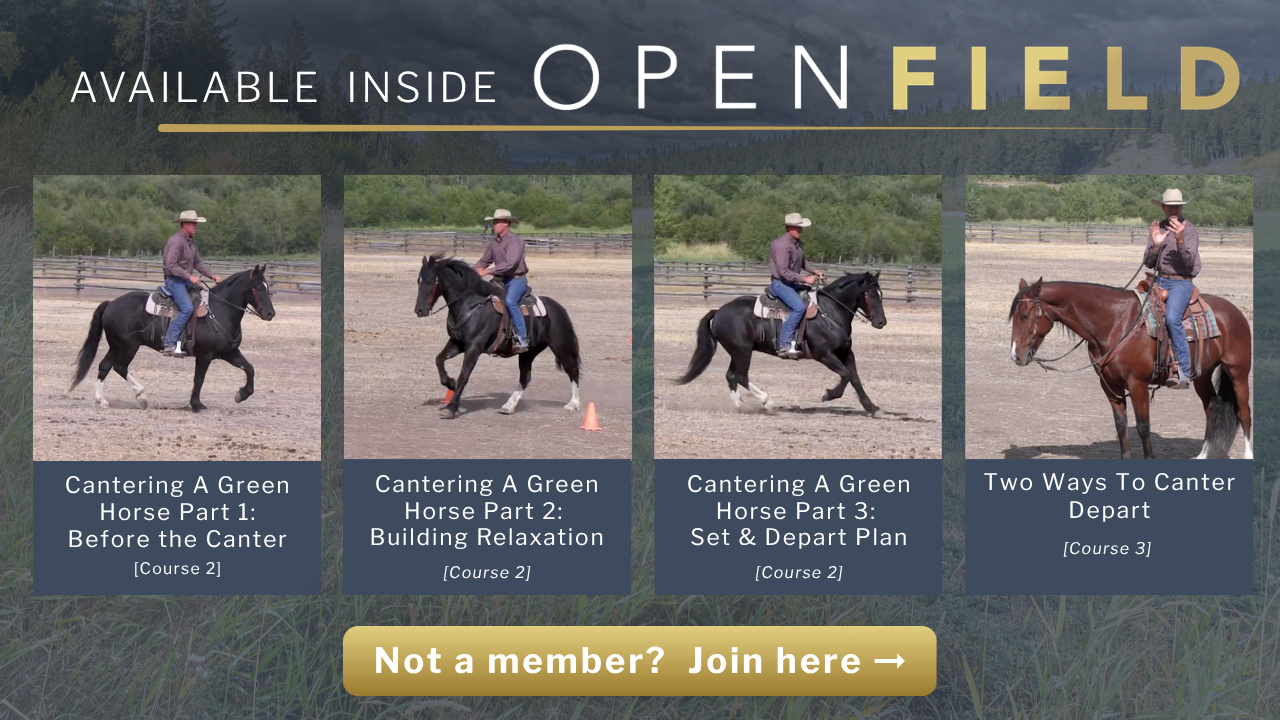
Inside the Open Field membership, you’ll find a three-part lesson series that walks you through this exercise step by step and shows you how to build on it as your horse develops.
You’ll also find a bonus lesson covering two different canter departures, when to use each one and how to choose the approach that best suits your horse.
Whether you’re starting a green horse or helping an experienced horse become more balanced and confident, these lessons will give you practical exercises you can use on your very next ride.
Stay inspired by horses,
— Jonathan
Author