The Eye Driveline: A Bolt Can Start with a Block
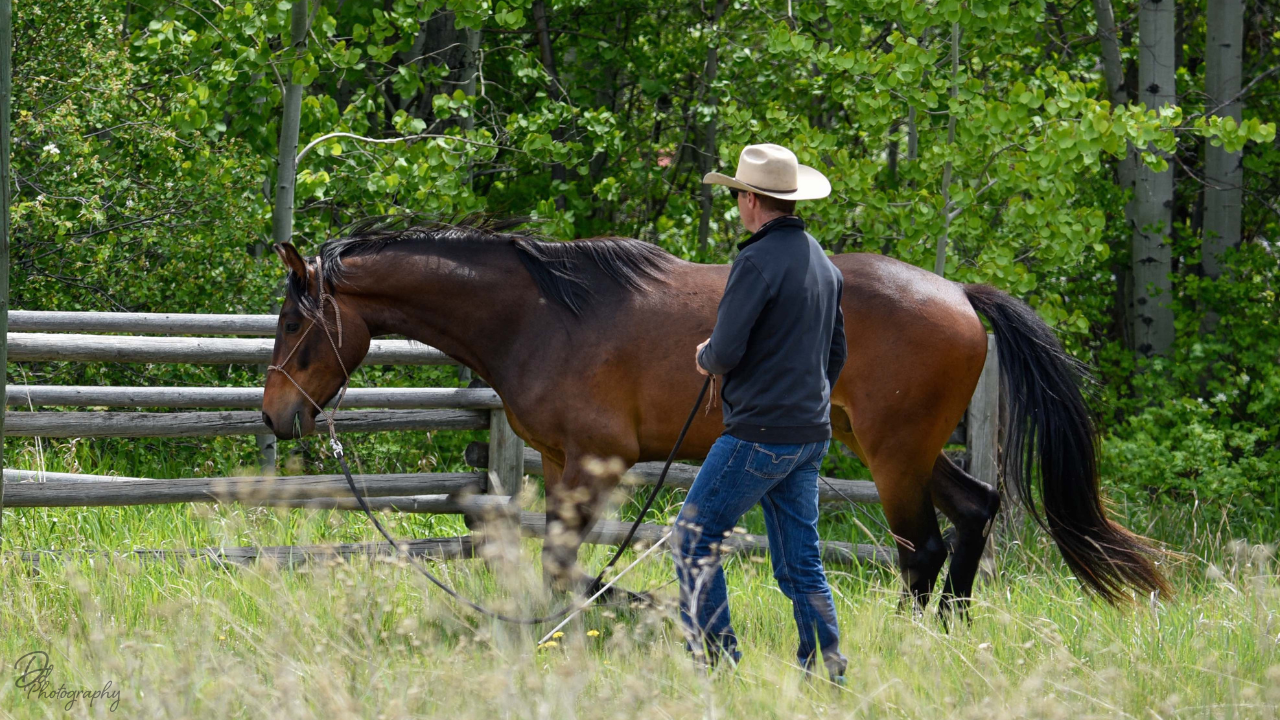
I want to start a conversation here that I think gets misunderstood a lot.
When a horse bolts, runs away, or feels like they’re always just a step ahead of you, we tend to label it quickly.
Hot. Forward. Sensitive. Maybe even disobedient.
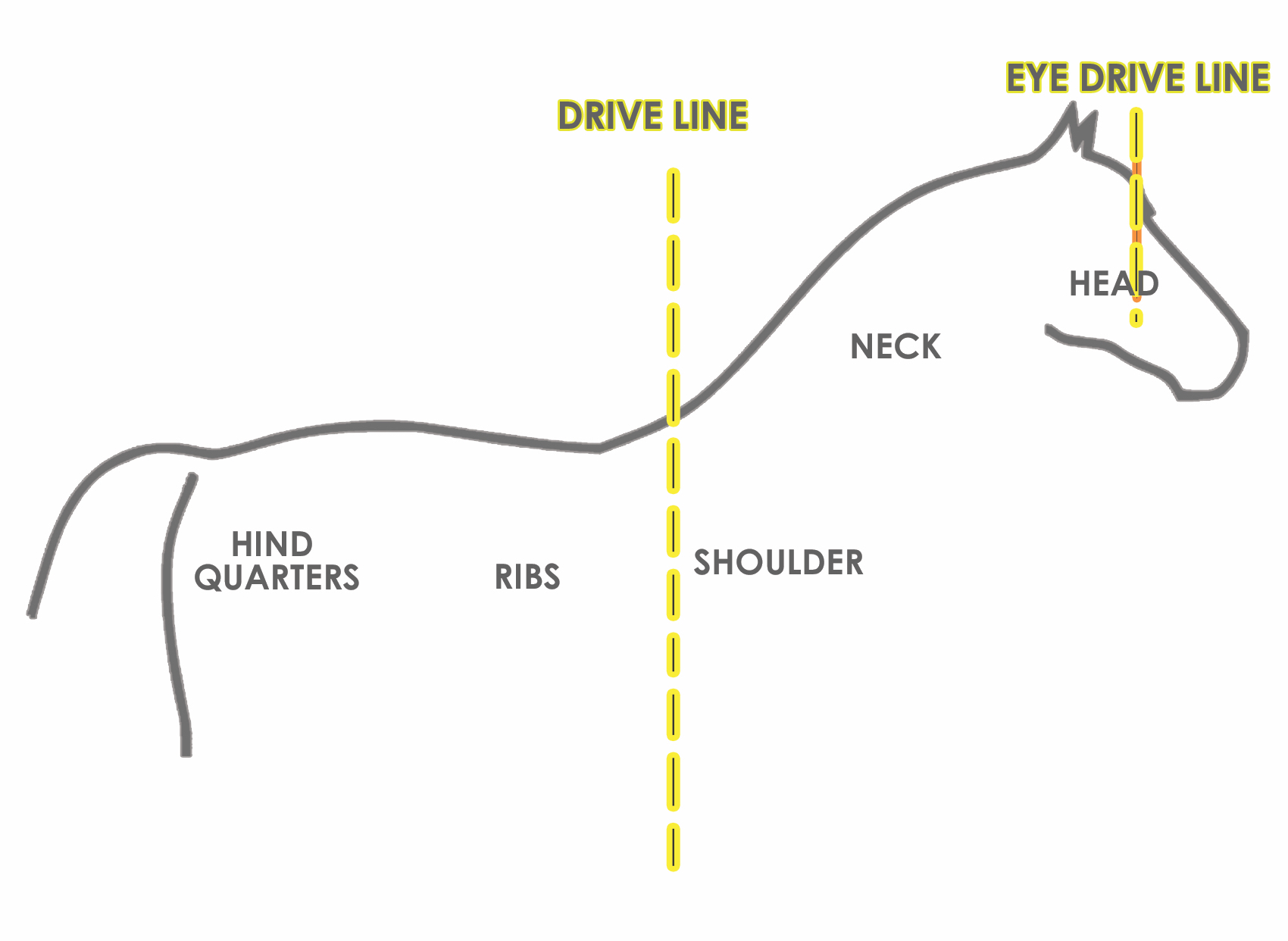
Sometimes what you’re feeling isn’t actually one of those behaviour problems. Sometimes it comes down to one subtle thing: your position in relation to the horse's eye. Something called the Eye Driveline.
And your position in relation to it matters.
When you start working with horses in hand, you'll notice pretty quickly that most horses naturally prefer you out in front of them. Things feel quieter there. Slower. Safer.
You may have experienced this with something as simple as carrying a saddle. The horse may stand there comfortably watching you hold it, but the moment you try to walk down their side they turn their head and block you. They don't really want to let you past the eye.
That matters.
The further you move down the side of the horse and communicate from behind the eye, the more vulnerable many horses feel to their body. If you pay attention, you'll notice horses often position themselves very specifically to keep you from getting uncomfortably past that point.
And this is where people can start paying attention right away.
Just walk around your horse.
Can you quietly walk down both sides without the horse blocking you with their head or neck? Can you move alongside the rib cage without them tightening, drifting away or preparing to leave? Or do they constantly reposition to keep you out in front?
Those little blocks matter more than most people think.
Because when we ride, we ride behind the eye.
Our legs, seat and presence all influence from behind that driveline. If the horse already feels defensive, blocked or insecure about those positions on the ground, those same feelings often show up under saddle too.
The trouble is most horses have never really been taught how to soften there.
So instead of relaxing, bending, thinking or staying connected, they brace. They lock up, They prepare to leave. Then one day enough pressure builds and what started as a simple block turns into a bolt.
The bolt rarely starts with the running.
Usually is starts much earlier in quieter moments people overlook. A blocked position. A brace. A horse that doesn't really want to let you past the eye.
That's why groundwork matters so much. Not because we're trying to tire horses out or just "desensitize" them, but because we're teaching confidence and understanding in the very positions that will later matter under saddle.
Sometimes the first place to improve a bolt is not riding harder.
It's simply being able to quietly walk down the side of your horse without them feeling the need to block you.
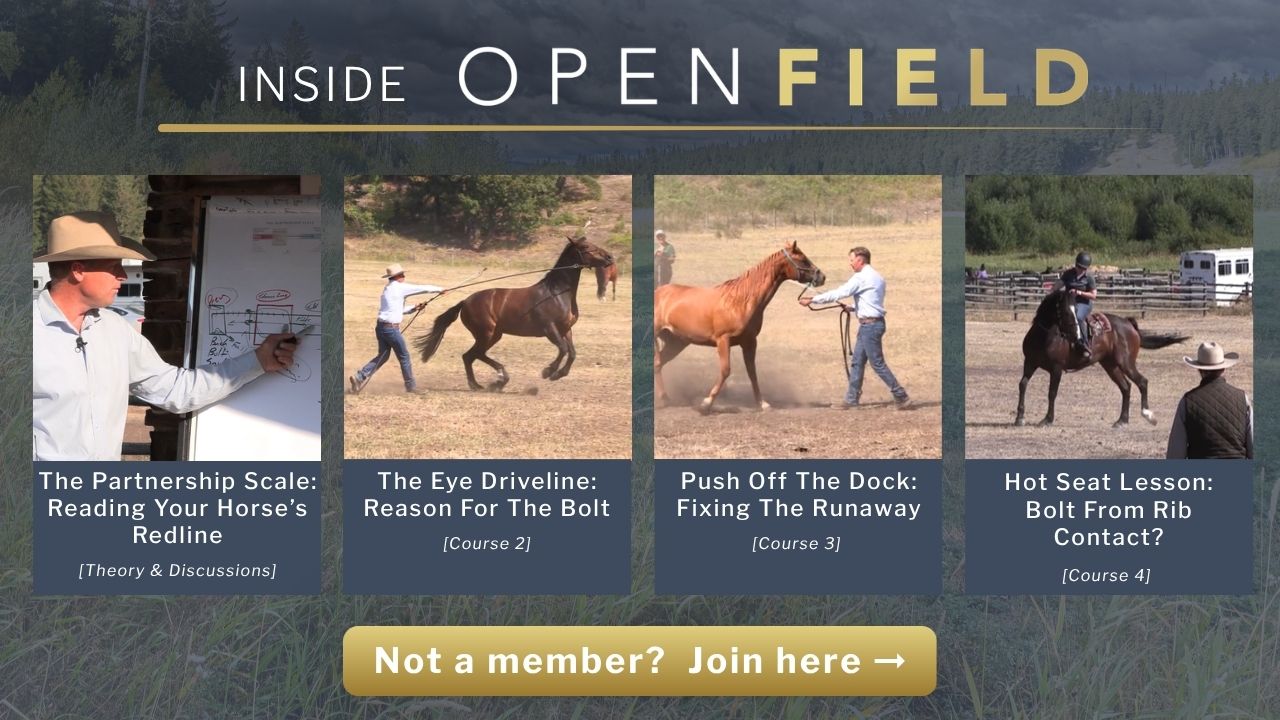
This is something we're going deeper into inside the Open Field Membership—looking at how these patterns show up and, more importantly, how to change them in real time with real horses.
Because once you understand this, you'll start to see it everywhere.
And that’s where the training really begins.
Stay Inspired By Horses®
Jonathan
P.S. If this conversation resonates with you in your groundwork or riding, head into Open Field and search for these lessons:
Author