Beyond the Tricks: What Liberty Reveals
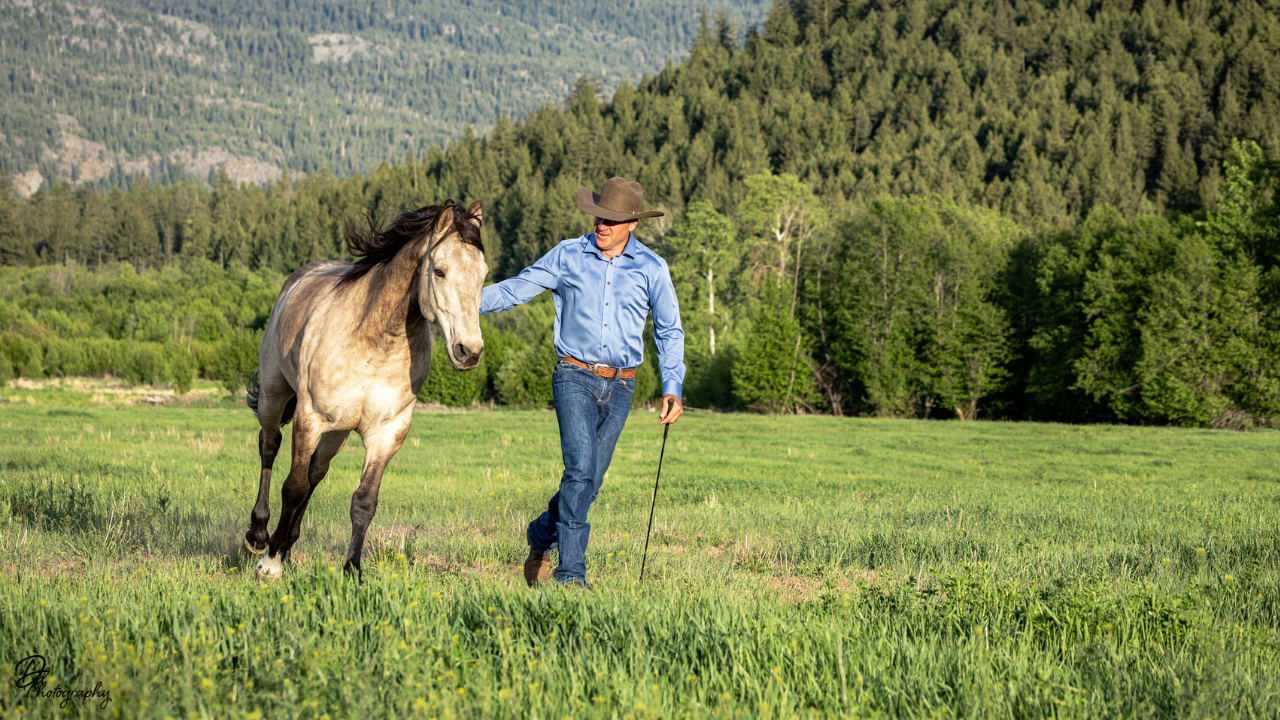
Liberty training is a hot topic in the horse world these days, and I think that’s a great thing. It’s exciting to see people having fun with their horses and exploring just how much they can do together.
There are many ways to explore liberty and just as many reasons to pursue it. Some people enjoy teaching tricks. Some love the challenge of performing without any physical connection. Some like to impress their neighbours and others simply enjoy the freedom of being with their horse.
Many people see liberty as a goal. For me, liberty has always been a little different.
I use liberty as a tool.
It’s a way to test what I’ve taught, discover what the horse understands and where his natural tendencies lie and get an honest look at the quality of the connection between us.
Ultimately, it gives me a way to test whether or not the horse and I are truly “In Feel” together.
When I take the halter and lead rope off, I want to know: Is my horse In Feel with me? Are we having a mutual conversation? Or has the horse simply learned to follow a command and “do the thing”?
There’s a big difference.
Liberty Shows You What’s Really There
One of the things I value most about liberty is how quickly it reveals a horse’s natural tendencies and preferences.
Every horse has them.
Maybe your horse naturally wants to be a little ahead of you, physically or mentally. He may travel out in front or constantly anticipate what he thinks you’re going to ask before you’ve asked it.
Another horse may tend to lag behind, needing more encouragement before he responds. Some want to be right on top of you while others continually drift away.
You may also notice that your horse is very different from one side to the other. Perhaps he bends or moves more easily in one direction or maybe he simply listens, responds and stays with you better on one side. There may be certain positions or angles where you lose him or places around his body he’s less comfortable allowing you into.
These preferences can be physical, mental or a little of both.
These aren’t necessarily problems. They’re feedback, important information that can feed-forward into what you do next.
Liberty gives me a clearer picture of where the horse naturally wants to be, where things come easily and where the locks, blocks and tension points might be.
Can You Create Change?
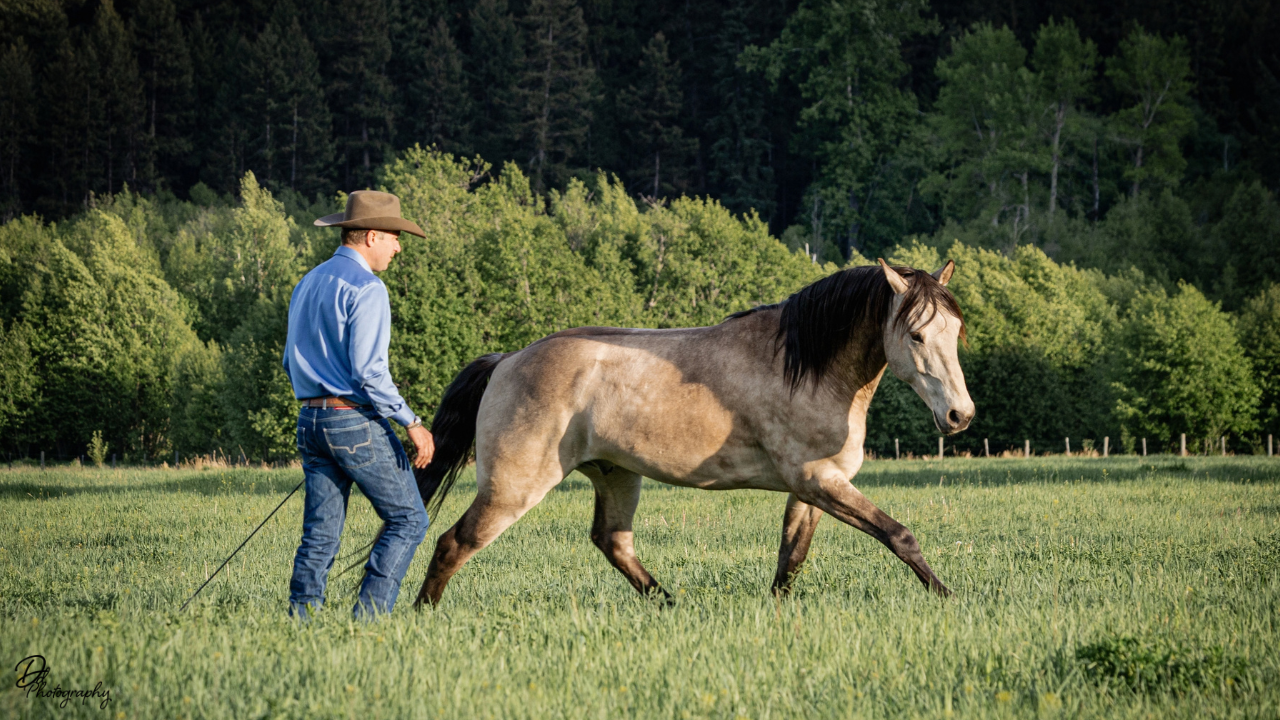
Once I can see those tendencies, the next question is: Can I help the horse change?
If he gets ahead of me, mentally or physically, can I bring him back? If he lags behind, can I motivate him to come with me? Can I “press to connect,” inviting him closer without creating frustration, force or fear? Can he mirror me, adjusting his energy while staying with me? If one side connects more easily, can we find that same balance on the other?
This isn’t about command and control or taking away the horse’s personality. I want to understand his natural tendencies, but I don’t want either of us to be limited by them.
The real question becomes: Through close observation of the horse, what do I need to change to help him find better balance and figure out the answer?
That ability to create change while maintaining the horse’s expression, confidence and willingness tells me a lot about the quality of what we have together.
Did My Horse Learn It or Did I Just Get It Done?
Sometimes we can accomplish quite a lot with a horse without realizing how much we’re helping him or how well he’s learned to take over and simply do what he thinks comes next.
Liberty has a way of exposing that.
A horse can learn a pattern, recognize a cue and give you the “right” answer without necessarily being In Feel with you.
That difference can be subtle. From the outside, it might even look pretty good. But I’m less interested in whether the horse completed the task than in the quality of how we got there.
Is he listening and responding to me in the moment? Can I make a change and have him recognize it, adjust and change with me?
When a horse is truly In Feel, there’s a different quality to it. There’s brightness in his expression, confidence in his movement, balance without stiffness and attention without tension. One makes a change and the other responds. There’s a sense of timing, awareness and flow between horse and human.
That’s what interests me.
For me, liberty isn’t the end goal. It’s a truth check. It shows me what I’ve actually taught, what the horse truly understands and where we may need to go next.
Beyond the Tricks
Teaching tricks is fun and there’s something special about enjoying a beautiful liberty performance or taking liberty all the way into a large arena or show. I’ve done that myself and I love what can be created when horse and human are truly working together, especially with a crowd present.
But for me, the performance is not the whole point.
Liberty is not simply about showing what my horse can do without a rope. It’s about discovering what remains when the rope is gone.
The next time you play with your horse at liberty, look beyond what you can get done. Pay attention to what your horse shows you, where things flow, where they don’t and what that tells you about the quality of your communication.
Those moments can teach us a lot.
Why do you practice liberty and what has your horse taught you through it?
Stay inspired by horses,
— Jonathan
Ready to Explore Liberty Further?
Continue learning Jonathan’s approach to liberty in two ways:

Author