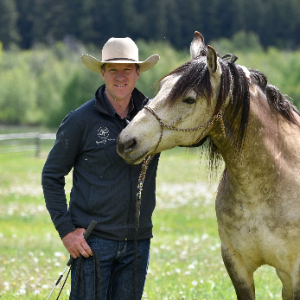
Are You Training Your Horse...or Educating Them?
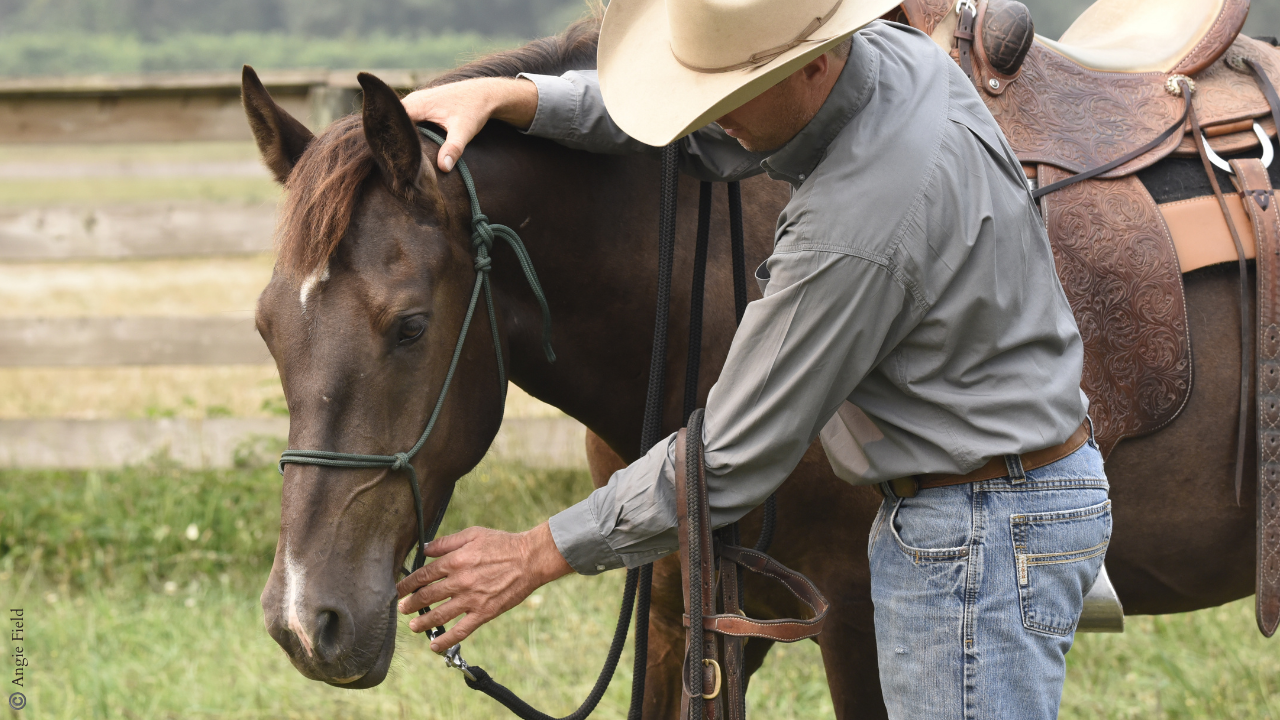
The skills every horse needs aren’t just about what they can do. They’re about giving your horse an education they can carry wherever life takes them.
Can your horse stand for the farrier? Load in a trailer? Lead politely? Stand quietly for the vet?
Yes, these are all important skills many horse owners talk about and would probably be near the top of any list of what we want our horses to know for everyday life.
But there’s a bigger question worth asking:
Did you teach the horse the answer or did you teach the horse how to find the answer?
There’s an important difference.
When we educate a horse, we’re not simply teaching the right response to a particular request. We’re teaching them how to learn.
We want our horses to become confident and curious enough to search for an answer. When they encounter a little pressure, uncertainty or something unfamiliar, instead of simply reacting, they can learn to pause, think and draw on answers they’ve already been taught.
Over time, we can develop a horse who becomes confident in their ability to work things out, even when we haven’t rehearsed the situation in advance.
That's a very different education than simply teaching a horse a collection of tasks.
Preparing Your Horse for Life
Most of us train our horses with our own goals in mind: the riding we want to do, the places we want to go and the life we want to lead with our horse.
But our responsibility to them goes beyond that.
Throughout their lifetime, our horses will interact with farriers, veterinarians, barn staff, trainers and other handlers. They may travel to unfamiliar places and encounter situations we never anticipated and, as much as we may not like to think about it, they may not always belong to us.
One of our greatest responsibilities as horse owners is to prepare our horses for a world in which we may not always be the person holding the end of the lead rope.
We can’t prepare them for every possible situation. But we can give them an education that helps them understand, adapt and cope when something new is asked of them.
And while that education may begin on the ground, it doesn't end there. The same understanding should carry from the end of a lead rope to the saddle.
It begins with some simple things:
1. Understanding Personal Space
Personal space may sound like basic ground manners, but there’s much more to it than teaching a horse not to step on you.
A horse needs to understand where their space ends and ours begins. They need to become aware of the person around them and understand that we can communicate about where their feet and body need to be.
In essence, the horse needs to learn to have regard for a human.
That understanding matters everywhere.
That matters when you're leading through a gate, when a farrier is underneath them, when a veterinarian needs to work in close quarters or when something unexpected makes the horse worried or distracted.
The goal isn't simply a horse that “stays out of your space.” It’s a horse that understands how to manage their body in relation to the people around them.
2. Lead Like a Leader
A horse may walk from the barn to the pasture every day without ever truly learning how to lead.
Once personal space and a sense of regard are established, the next step is connection.
Leading isn't simply about getting your horse from Point A to Point B. It's about learning to move together.
Can your horse synchronize with you? When you change your pace or direction, are they aware of you and able to adjust with you? Whether your horse is beside you or at a distance behind, is there still a connection?
Rather than being taken for a walk by your horse, you're developing a horse who is connected to you and paying attention to where you're going together.
The position may change from the ground to the saddle, but the principle remains the same: stay connected and move together.
3. Follow a Feel Throughout the Body
That same conversation shouldn't exist only at the end of the lead rope or on the ground. It applies under saddle as well.
Can your horse follow a feel when you touch different areas of their body?
Can they understand a request to move their shoulder, ribs, hindquarters, head or feet? Can they soften rather than brace and recognize when they've found the answer?
A feel through a rein or a leg may look different, but we’re building on the same conversation: can the horse feel a request, understand what we’re wanting and respond without bracing or becoming worried?
A veterinarian may need them to shift their body. A farrier may need them to reposition a foot. A rider may need to influence a shoulder or hip to help the horse navigate a difficult situation.
The situation changes, but the foundation remains the same.
You can't rehearse every scenario. But you can teach your horse a language that helps them understand when someone asks them to move, yield or follow a feel.
4. Put It to a Purpose
Once your horse begins to understand these basic conversations, put them to a purpose.
Give your horse a puzzle to solve.
Ask them to navigate an obstacle, position their feet somewhere specific, move through a tight space such as a gate, travel unfamiliar terrain, or use their body in a new way.
The challenge itself isn’t the only important thing. It's what your horse learns while figuring it out.
Can they take the things you've taught them and apply them to a situation that looks a little different? Can they slow down enough to think their way through a problem? When they don't immediately know what to do, do they understand that there's an answer to seek?
Rather than showing them exactly what to do every time, help them search, try and discover the answer.
That's how these simple skills begin to become something much bigger: an education that teaches the horse to think, problem-solve and learn, whether you’re standing beside them or sitting in the saddle.
Don't Skip the Basics
It's easy to become focused on our goals. We want to ride better, develop more advanced movements, head down the trail, or solve the behaviour that's frustrating us today.
But so much of what makes those things possible starts with the same simple foundation.
Yes, our horses still need to learn practical skills like loading into trailers, picking up their feet, and standing still.
But the task shouldn’t be the end of the education.
Can your horse understand and respect personal space, stay connected and follow a feel throughout their body? Can that understanding carry from the ground into the saddle? And when the situation changes, can they use what they've learned to think their way through to an answer?
That’s why it’s not just about a horse being able to check boxes. A well-educated horse has learned how to learn.
These aren't simply beginner exercises to get through before the “real” training starts. They are the education.
And the better we teach them, the more prepared our horses become, not just for the things we want to do with them, but for whatever life may ask of them in the future.
Start With the Foundation
If you'd like to explore these fundamentals with your own horse, from the ground to the saddle, Course 1: Leadership to Partnership is where we start.
Because the goal isn't simply to teach your horse what to do today.
It's to give them an education they can carry with them for life.
Stay inspired by horses,
— Jonathan
Author